






Master the Science and Practice of Leadership Intelligence
Become a Certified Leadership Intelligence Coach with a proven step-by-step framework built on Behavior Intelligence.
The Certification Journey:
3 Core Pillars
Behavior Intelligence Foundations
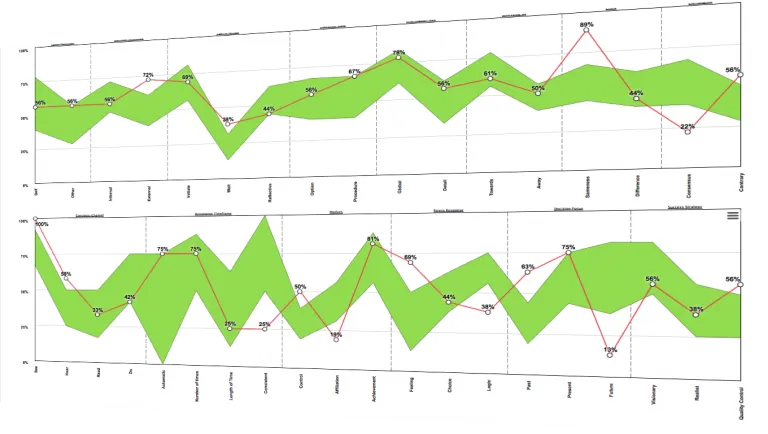
Understand and map human behavior scientifically
Leadership Intelligence Application
Apply behavior science to coaching and leadership
Business Launch and Growth
Build, market, and scale your coaching business
Pillar 1: Behavior Intelligence Foundations
Module 1: Introduction to Behavior Intelligence (BIQ)
Behavior as the most actionable lens for coaching
Neuroscience principles behind BIQ
Module 2: Mapping Behavior Patterns
AccuMatch Methodology Overview
Practice mapping real behaviors
Module 3: Changing Behavior Patterns
Intervention models
Practical coaching frameworks for lasting change
Pillar 2: Leadership Intelligence Application
Module 4: Coaching Leaders Using Behavior Intelligence
Identifying leadership styles through behaviors
Coaching executives for performance outcomes
Module 5: Leading Teams with BIQ
Group dynamics and organizational behavior mapping
Behavior-based team development strategies
Module 6: Conflict Resolution & Communication Mastery
Using BIQ to prevent and resolve leadership breakdowns
Pillar 3: Business Launch and Growth
Module 7: Building Your Coaching/Consulting Business
Defining your niche and offer
Pricing and packaging your services
Module 8: Marketing for Coaches and Consultants
Messaging that converts
Using behavior triggers in marketing
Module 9: Scaling Your Practice
Group programs, corporate contracts, licensing opportunities
Bonus Masterclasses Included:
Topics could include:
Neuroscience and Leadership
Advanced Behavior Mapping Techniques
Behavior Intelligence for Change Management
Your Certification Journey: Simple and Supportive

Inquire and Enroll

Complete Online and Live Training Modules

Practice with Real Clients
(Practice cohort support)

Certification Assessment
(Coach live or submit client cases)

Launch with Full Business Platform and Community Support
To Earn Your Certification:
Complete all online modules
Attend 2 live practicums (or submit client sessions)
Pass final case study or practical
80% minimum attendance/participation
Ready to Launch Your Future as a Certified Leadership Intelligence Coach?
Real Coaches.
Real Success.

"I’ve been coaching for over a decade, but the BIQ certification completely changed how I work with clients. Understanding their behavior patterns—not just their feelings—gave me a new level of precision. My client retention and referrals have never been higher."
Lena Morales, Executive Coach
"BIQ helped me launch my coaching business fast—with structure, confidence, and real clients."
David Chan, Former VP
"We rolled out BIQ inside our leadership development program. The impact was immediate. Managers became more self-aware, team dynamics improved, and performance conversations finally got real. It’s not just a certification—it’s a competitive edge."
Rachel Owens, Learning & Development Director, UK
Latest From The Blog

Emotional Intelligence Refined: Leading with Clarity, Not Reactivity
Leadership is not just about managing tasks—it’s about guiding people. And when you’re leading people, emotions inevitably show up. But here’s the catch: the moment we blur the line between what we feel and what’s actually happening, we lose clarity. And without clarity, leadership becomes reactive instead of intentional.
This is why emotional intelligence, when refined, isn’t about suppressing emotions. It’s about understanding what belongs to you, what belongs to others, and what the facts really are.

Why Emotional Clarity Matters in Leadership
Many leaders naturally lean toward what’s measurable—numbers, KPIs, tasks. These give instant feedback and a sense of control. But people aren’t spreadsheets.
When we work with human behavior, results aren’t always immediate or visible. That ambiguity often pushes leaders back into “busy work” instead of doing the deeper work of guiding their teams.
The real impact happens when we shift from reacting emotionally to leading with clarity.
Why this matters:
Emotional reactions trigger defensiveness, shutting down collaboration.
Projecting feelings instead of observing behavior creates distortion.
Focusing on facts builds trust, engagement, and better outcomes.
Feelings vs. Facts: The Foundation of Emotional Intelligence
Here’s the truth: you can’t read minds—and neither can your team. When you say, “I can see you’re angry,” you’re not stating a fact. You’re projecting your interpretation.
Instead, anchor your conversations in what’s observable.
❌ “You’re upset.” (assumption)
✅ “I observed you left the meeting early.” (fact)
Behavior is visible. Emotions are internal. When we mistake one for the other, we create unnecessary tension. But when we separate observation from interpretation, we create space for real dialogue.
Why “You” and “Why” Trigger Defensiveness
Language shapes emotional responses. Words like “you” and “why” may seem harmless, but they often trigger the brain’s fight or flight response.
“Why did you do that?”
“You seem defensive.”
The amygdala lights up, the frontal cortex shuts down, and what could have been a productive conversation becomes a defensive battle.
Try this instead:
“Can you share what prompted that choice?”
“I noticed you crossed your arms when I mentioned the deadline. What thoughts came up for you in that moment?”
This language invites clarification rather than demanding justification.

Separate the Signal from the Story (The SSI Method)
One of the most powerful tools you can use as a leader is the Signal–Story–Inquiry method.
Signal – Notice what triggered you.
Story – Acknowledge the narrative you’re building in your head.
Inquiry – Open a neutral, curious conversation.
For example:
A team member leaves the meeting six minutes early.
Signal: They walked out early.
Story: “They’re bored” or “They’re frustrated.”
Inquiry: “Can you share what prompted you to step out early?”
Nine times out of ten, their reality is different from the story you created.
Practical Techniques to Regain Emotional Clarity
Emotional intelligence isn’t a one-time insight—it’s a trained habit. These practices build your leadership muscle:
🧠 Pause before reacting. A two-second reset can make the difference between clarity and chaos.
🫁 Ground yourself before important conversations. Breathing, quick reflection, or a reset ritual can help engage your prefrontal cortex.
✍️ Externalize your triggers. Jotting down your initial reaction lets your brain set it aside so you can focus on the conversation.
🔄 Close the loop. Notice how the new behavior impacts the outcome—this is how you reinforce the habit.
The more you repeat these steps, the more your brain creates a new neural pathway for calm, clear leadership.
Building Empathy Without Losing Boundaries
True empathy is not about absorbing someone else’s emotions—it’s about understanding their experience without merging it with yours.
Separate your emotional state from theirs.
Focus on facts, not assumptions.
Invite them to share their perspective.
When you do this consistently, your team learns to trust the space you create. They feel heard—not judged.
Leading With Behavior Intelligence
At the heart of refined emotional intelligence is Behavior Intelligence—the practice of leading through observable behaviors rather than assumptions or feelings.
This is what shifts leadership from reaction to strategy.
This is what turns a team from passive responders into active collaborators.
This is what helps leaders create impact with precision.
Key reminders:
Lead with facts, not feelings.
Replace judgment with curiosity.
Build habits that anchor you in clarity.

From Busy Manager to Intelligent Leader
Most people are promoted because they’re good at tasks—not because they know how to lead people. But leadership is a different game. It requires shifting from doing the work to guiding people who do the work.
This shift is where real leadership happens.
Not through control, but through clarity.
Not through reaction, but through understanding.
Not through assumptions, but through inquiry.
Final Takeaway: Refine Your Emotional Intelligence, Elevate Your Leadership
When you separate signals from stories and feelings from facts, you create space for trust, clarity, and performance to thrive. This isn’t about ignoring emotions—it’s about giving them the right place in the conversation.
If you want to deepen your leadership practice and learn how to apply Behavior Intelligence in real-world scenarios, I invite you to explore our Leadership Intelligence programs.
👉 Inquire Now or Book a Call to discover how you can lead with clarity, not reactivity.

Subscribe to our Newsletter!
Get the latest insights on coaching, behavior intelligence, & leadership.


Copyright 2026 • All Rights Reserved
Behavior Intelligence Organization is a Division of NLP Profiles Inc.
Terms of Use | Privacy Policy
Subscribe to our Newsletter!
Get the latest insights on coaching, behavior intelligence, & leadership.
Copyright 2025 • All Rights Reserved
Behavior Intelligence Organization is a Division of NLP Profiles Inc.
Terms of Use | Privacy Policy