






Master the Science and Practice of Leadership Intelligence
Become a Certified Leadership Intelligence Coach with a proven step-by-step framework built on Behavior Intelligence.
The Certification Journey:
3 Core Pillars
Behavior Intelligence Foundations
Understand and map human behavior scientifically
Leadership Intelligence Application
Apply behavior science to coaching and leadership
Business Launch and Growth
Build, market, and scale your coaching business
Pillar 1: Behavior Intelligence Foundations
Module 1: Introduction to Behavior Intelligence (BIQ)
Behavior as the most actionable lens for coaching
Neuroscience principles behind BIQ
Module 2: Mapping Behavior Patterns
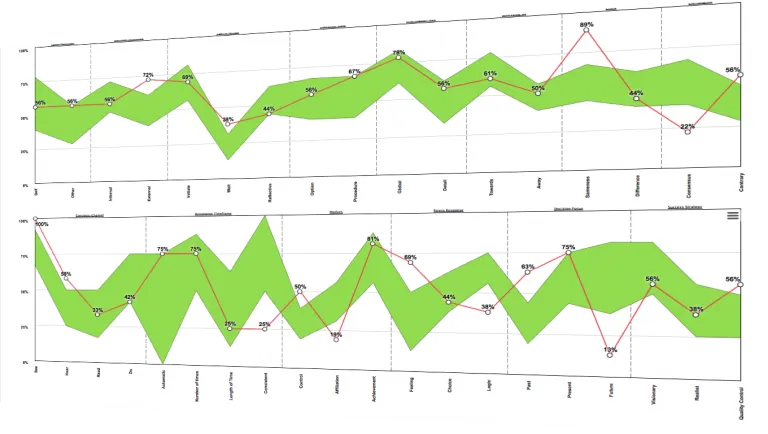
AccuMatch Methodology Overview
Practice mapping real behaviors
Module 3: Changing Behavior Patterns
Intervention models
Practical coaching frameworks for lasting change
Pillar 2: Leadership Intelligence Application
Module 4: Coaching Leaders Using Behavior Intelligence
Identifying leadership styles through behaviors
Coaching executives for performance outcomes
Module 5: Leading Teams with BIQ
Group dynamics and organizational behavior mapping
Behavior-based team development strategies
Module 6: Conflict Resolution & Communication Mastery
Using BIQ to prevent and resolve leadership breakdowns
Pillar 3: Business Launch and Growth
Module 7: Building Your Coaching/Consulting Business
Defining your niche and offer
Pricing and packaging your services
Module 8: Marketing for Coaches and Consultants
Messaging that converts
Using behavior triggers in marketing
Module 9: Scaling Your Practice
Group programs, corporate contracts, licensing opportunities
Bonus Masterclasses Included:
Topics could include:
Neuroscience and Leadership
Advanced Behavior Mapping Techniques
Behavior Intelligence for Change Management
Your Certification Journey: Simple and Supportive

Inquire and Enroll

Complete Online and Live Training Modules

Practice with Real Clients
(Practice cohort support)

Certification Assessment
(Coach live or submit client cases)

Launch with Full Business Platform and Community Support
To Earn Your Certification:
Complete all online modules
Attend 2 live practicums (or submit client sessions)
Pass final case study or practical
80% minimum attendance/participation
Ready to Launch Your Future as a Certified Leadership Intelligence Coach?
Real Coaches.
Real Success.

"I’ve been coaching for over a decade, but the BIQ certification completely changed how I work with clients. Understanding their behavior patterns—not just their feelings—gave me a new level of precision. My client retention and referrals have never been higher."
Lena Morales, Executive Coach
"BIQ helped me launch my coaching business fast—with structure, confidence, and real clients."
David Chan, Former VP
"We rolled out BIQ inside our leadership development program. The impact was immediate. Managers became more self-aware, team dynamics improved, and performance conversations finally got real. It’s not just a certification—it’s a competitive edge."
Rachel Owens, Learning & Development Director, UK
Latest From The Blog

From Overwhelmed to In Control
Burnout isn’t about how many hours you work.
It’s not even about how many tasks you’re juggling.
It’s about how you use your time—and more importantly—how your behavior patterns influence your use of time, energy, and clarity.
In this guide, I’ll show you how to decode the unconscious patterns driving your decisions, recognize what’s really behind overwhelm, and start building the habits that help you scale sustainably—whether you’re a coach, a team leader, or an entrepreneur.
No fluff. No hacks. Just real behavior intelligence in action.

Overwhelm is a Pattern—Not a Personality Flaw
Let’s start with a truth most people miss:
Overwhelm isn’t caused by your to-do list. It’s caused by how you behave with the time you have.
You may be experiencing:
Chronic busyness
A sense of “never catching up”
Difficulty focusing
Guilt for taking time off
Emotional exhaustion
Difficulty making decisions
These are symptoms, not causes.
The real cause is a mismatch between your behavior patterns and the demands you’re facing. When your internal wiring defaults to constant responsiveness, perfectionism, or avoidance, your system gets overloaded—fast.
🚨 Burnout Starts with Mismanaged Energy, Not Time
If you think you’re just "too busy," it’s time to zoom out.
Most time challenges are actually behavior challenges in disguise.
You don’t need more hours—you need better ways of using them.
Here’s a key truth:
Burnout isn’t caused by doing too much. It’s caused by doing the wrong things, in the wrong way, for too long.
Common signs include:
Always reacting instead of planning
Multitasking that kills focus
Guilt over taking breaks
Juggling endlessly but rarely moving forward
Avoidance, procrastination, or perfectionism—fueled by stress, not laziness
These behaviors are patterns—not personality flaws. That’s good news. Because patterns can be changed.
Behavior is Programmed—And Can Be Reprogrammed
Everything you do on autopilot—saying yes too often, procrastinating, multitasking, even burning out—is a behavior pattern your brain has learned and repeated.
Whether it’s brushing your teeth or responding to email at midnight, you’ve run these behaviors enough times that they’ve become neural shortcuts.
Here’s the good news:
You can change the pattern. But first, you need to see it clearly.
Behavior Intelligence is the skill of identifying your default patterns and reprogramming them with deliberate intent.

Common Stress-Amplifying Patterns (and How to Spot Them)
Let’s break down the most common behavior traps:
1. Overcommitting
Saying “yes” when you should say “no” creates a backlog of tasks that don’t align with your priorities.
Reframe: Set clear filters. Ask: Does this move me forward or distract me?
2. Avoidance & Procrastination
Not laziness. These often stem from fear, perfectionism, or disguised “busyness.”
Reframe: Time-box your decisions. Practice making faster, imperfect calls.
3. Multitasking
Every switch drains your focus. The brain wasn’t built to juggle.
Reframe: Single-task with intention. Cross it off. Boost momentum.
4. Perfectionism
“Just right” is the enemy of progress.
Reframe: Ask: When is good enough actually enough?

Pattern Recognition: Practical Tools to Shift Behavior
Step 1: Identify Your Patterns
Use reflection or tools like AccuMatchBI to spot the traits running the show. Ask yourself:
Do I prefer sameness or change?
Am I more fear-driven or opportunity-driven?
Do I tend to initiate or respond?
What am I avoiding?
This kind of awareness unlocks new choices.
Step 2: Pick One Pattern to Shift
Don’t fix everything. Focus on the one that’s costing you most.
Step 3: Design a Focus Sprint
Commit to it for 30 days using the 1–2–3–4 Method:
Week 1: Once per day
Week 2: Twice per day
Week 3: Three times a day
Week 4: Lock it in and track
Visual tools like whiteboards or sticky notes help trigger that feel-good dopamine that cements the new wiring.
Delegation Is Not a Skill—It’s a Pattern
If your inner voice says, “I’ll just do it myself,” that’s not lack of skill. It’s a behavior loop tied to control, trust, or fear of being let down.
Delegation becomes easier when you remember:
You weren’t born knowing what you know.
Others can grow too—with support.
Delegating isn’t about losing control—it’s about investing in outcomes.
Start with one task. Set the expectation. Offer support. Let go.
It’s not just about time—it’s about training new patterns in you and in them.

Build Systems That Support You
Behavior doesn’t happen in isolation. It interacts with:
Your calendar
Your tools
Your team
Your environment
Ask yourself:
What cues around me are reinforcing the old behavior?
What small system tweak could make the new habit easier?
Sometimes the biggest shift is external. Make your environment work for your behavior, not against it.
Habit Stacking and Ecological Shifts
Not all changes happen solo. Some need cultural support. Others rely on timing.
So stack your shifts:
Morning coffee → Planning session
Midday break → Quick reflection
End-of-day → Progress review + tomorrow plan
Think of it as behavior design, not willpower.
One Year, One Habit per Month = 12 Transformations
Shift just one pattern each month.
That’s 12 strategic upgrades in a year.
You’ll look back in 12 months and barely recognize the version of you who once burned out on auto-pilot.

Final Thoughts
Overwhelm is not a time issue—it’s a behavior clarity issue.
Burnout is not the price of ambition—it’s the result of unchecked patterns.
Scaling isn’t about doing more—it’s about doing the right things with focus and energy.
You don’t need to fix yourself. You need to understand your wiring—and start building new patterns, one decision at a time.
Ready to go deeper? Map your patterns, preview the Behavior Intelligence Cookbook, or explore tools like AccuMatchBI.
Just email me: [email protected]
We’re building something real, practical, and lasting—for those who want to grow without breaking.
Let’s keep it simple. And make it stick.

Subscribe to our Newsletter!
Get the latest insights on coaching, behavior intelligence, & leadership.


Copyright 2026 • All Rights Reserved
Behavior Intelligence Organization is a Division of NLP Profiles Inc.
Terms of Use | Privacy Policy
Subscribe to our Newsletter!
Get the latest insights on coaching, behavior intelligence, & leadership.
Copyright 2025 • All Rights Reserved
Behavior Intelligence Organization is a Division of NLP Profiles Inc.
Terms of Use | Privacy Policy