






Become a Certified Leadership Intelligence Coach
Lead with clarity. Coach with science. Grow with purpose. Powered by Behavior Intelligence (BIQ).

Trusted by:





Leadership today demands more than emotional intelligence. It demands Behavior Intelligence.
Certified credibility
Practical behavior-driven methods
Business growth platform
Global network of professionals
How You’ll Build and Grow

Get Certified
Become a Leadership Intelligence Coach

Master Behavior Intelligence
Train, Practice, Apply

Grow Your Business
Use our tools and support systems
Where are you starting from?
Executive transitioning to coaching?
Experienced coach seeking edge?
Organization building leaders?
Your Complete Coaching Advantage
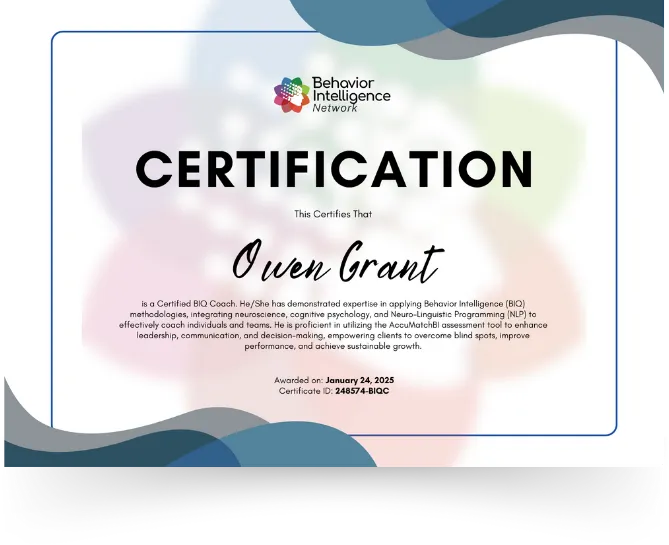
Certification
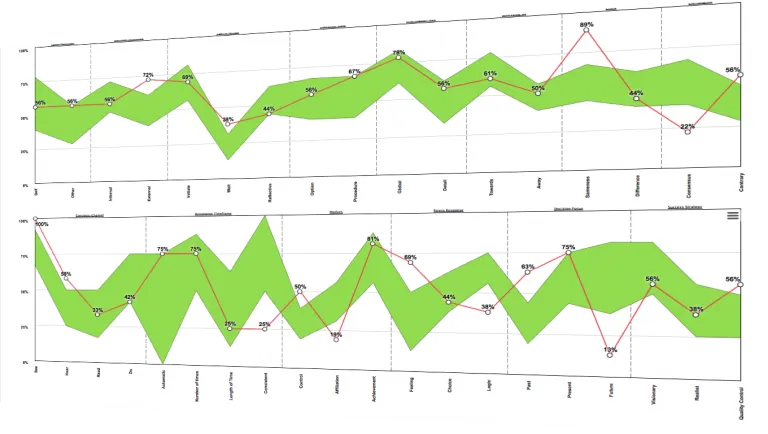
Leadership Intelligence, Behavior Intelligence, AccuMatchBI

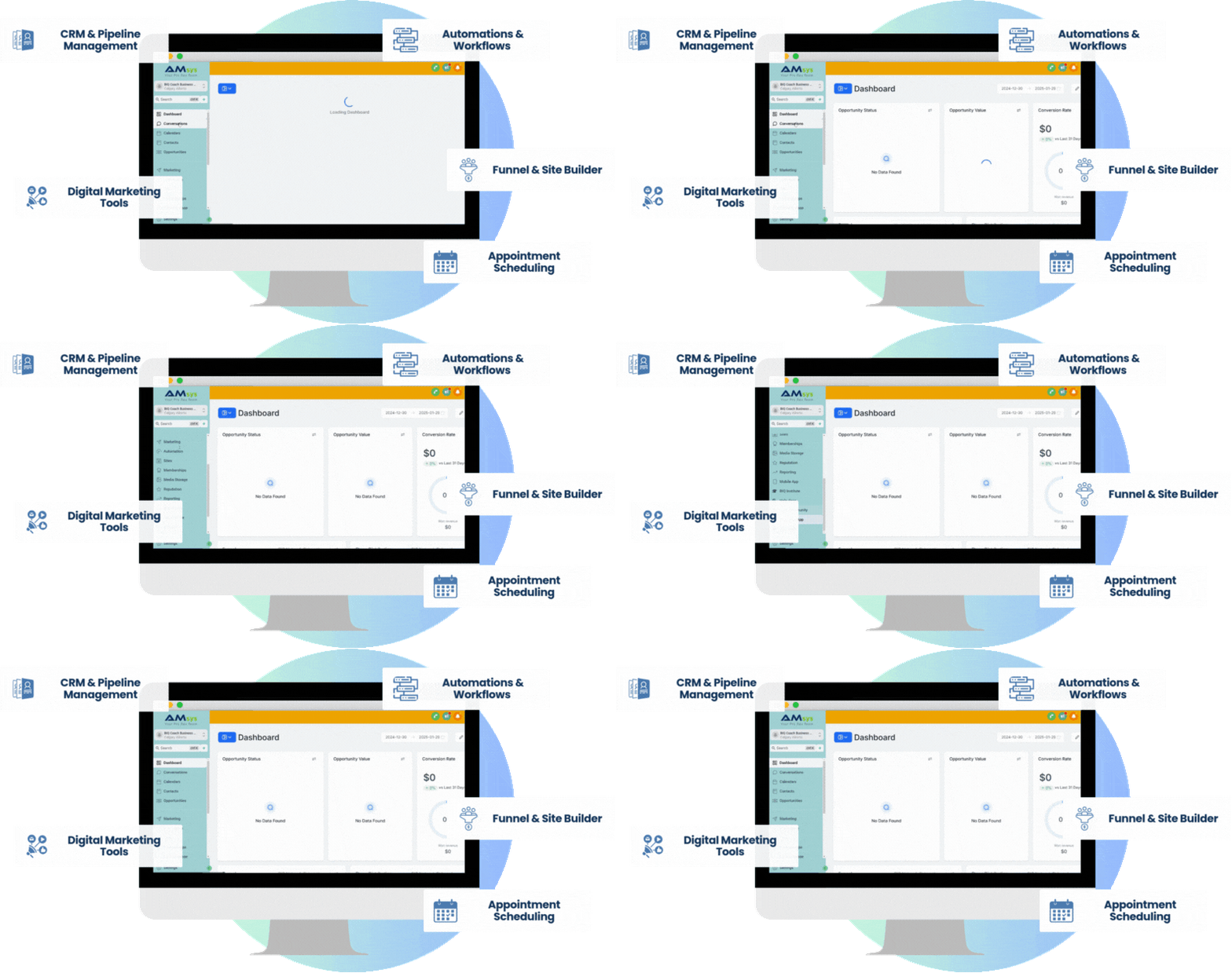
Business Platform
CRM, Marketing Systems, Templates
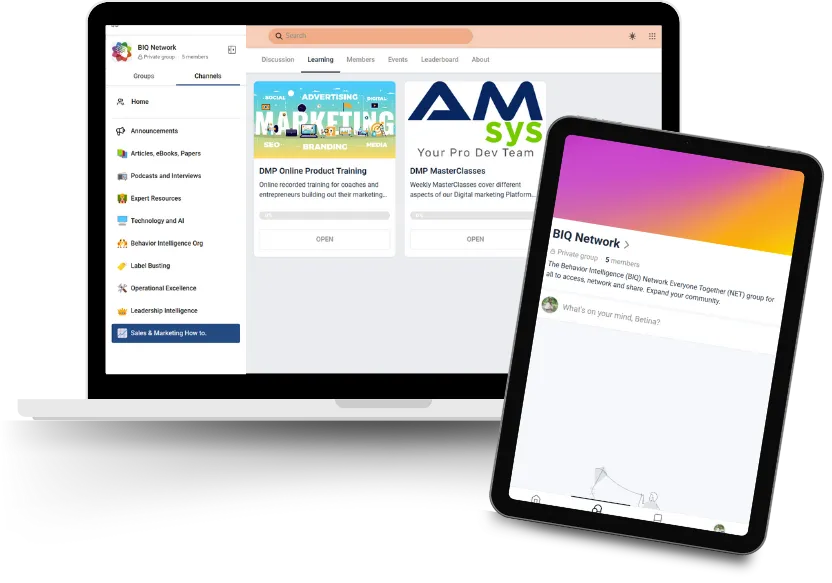
Community & Ongoing Growth
Access to BIQ Experts and Peer Network
Real Coaches.
Real Success.

"I’ve been coaching for over a decade, but the BIQ certification completely changed how I work with clients. Understanding their behavior patterns—not just their feelings—gave me a new level of precision. My client retention and referrals have never been higher."
Lena Morales, Executive Coach
"BIQ helped me launch my coaching business fast—with structure, confidence, and real clients."
David Chan, Former VP
"We rolled out BIQ inside our leadership development program. The impact was immediate. Managers became more self-aware, team dynamics improved, and performance conversations finally got real. It’s not just a certification—it’s a competitive edge."
Rachel Owens, Learning & Development Director, UK
Ready to Lead with Intelligence?
Latest From The Blog

Why Your Strategy Lives in a Binder—And How to Make It Live in Daily Action
Most organizations don’t fail at strategy. They fail at execution.
I’ve seen it repeatedly over the last four decades working with leaders and organizations around the world. Teams invest months—sometimes years—crafting thoughtful strategies, only to watch them quietly disappear once the slide decks are closed and the binders are shelved.
The problem isn’t ambition. It’s translation.
Strategy lives in language. Execution lives in behavior. And when the two aren’t deliberately connected, nothing changes.
This article breaks down the behavior-driven principles that turn strategy from an abstract idea into daily, observable action—so it actually delivers results.

The Real Execution Gap
Strategy often fails not because it’s wrong, but because it’s vague.
Words like innovation, growth, customer focus, or collaboration sound inspiring. But inspiration alone doesn’t change behavior. People interpret these words through their own experiences, roles, and pressures—which means everyone walks away with a different version of what success looks like.
Execution breaks down in the space between intention and action.
To close that gap, we need to shift from abstract goals to specific, observable behaviors.
This is the foundation of Behavior Intelligence: if you can’t observe it, you can’t predict it—and you certainly can’t manage it.

Principle 1: Translate Strategy Into Observable Behavior
Every strategy must be translated into behaviors you can actually see.
Ask a simple question:
If this strategy were working, what would people be doing differently—today?
For example:
“Innovation” might become testing one new idea with customers every week
“Customer focus” might become three direct customer conversations per week
“Collaboration” might become cross-functional check-ins twice weekly
The goal is specificity.
Choose one strategic priority at a time, then define three to five behaviors that:
Are observable
Are measurable
Can be tracked over time
These behaviors become your leading indicators—far more useful than lagging results you can’t change.
Principle 2: Build the Behavioral Cascade
One of the most common execution failures happens at scale.
Leadership sets goals at the top, but behavior is never defined at each level of the organization. Goals tell people what to achieve—but not how.
Behavior must cascade.
That means:
Executives define behaviors aligned to strategic direction
Directors translate those into weekly operating behaviors
Managers reinforce daily actions
Frontline teams execute hourly decisions
Each level contributes its own set of behavioral indicators that feed into the next.
When behaviors are aligned across levels, execution becomes predictable.
Without this cascade, even the best KPIs remain disconnected from reality.

Principle 3: Audit the Calendar—Your Real Strategy
Want to know what your real strategy is?
Look at your calendar.
If people leave a strategy meeting and immediately return to the same meetings, same priorities, and same pressures, nothing has changed.
A calendar audit reveals:
Where time is actually spent
Which activities support strategy—and which contradict it
How much time is allocated to strategic work versus firefighting
This isn’t about control. It’s about awareness.
When individuals see the disconnect between stated priorities and actual time use, they’re far more likely to help redesign their work intentionally.
Strategy must be visible in how time is protected—not just how it’s announced.
Principle 4: Track Behavioral Milestones—Not Just Outcomes
Results don’t appear out of nowhere. They lag behavior.
If you only track outcomes, you find out too late.
Behavioral milestones allow you to predict success early. They answer the question:
Are we doing the things that make success inevitable?
For example:
Revenue growth might depend on prospecting calls, proposals sent, and follow-ups completed
Quality improvements might depend on review cycles, audits, and corrective actions
Define the behaviors that precede results. Track them weekly. Review them consistently.
When behaviors are on track, results almost always follow.
Principle 5: Make Strategy Visible in Decisions
Every decision sends a message.
If your strategy emphasizes long-term growth, but your decisions reward short-term cost cutting, the strategy isn’t real.
Execution fails when decisions quietly undermine stated priorities.
Leaders must regularly ask:
Does this decision reinforce our strategy—or contradict it?
What behavior does this decision reward?
Not every decision must align—but enough of them must.
Even aligning 20% of decisions intentionally can drive 80% of strategic momentum.

Principle 6: Create Feedback Loops That Reinforce Behavior
Behavior only sticks when it’s reinforced.
The brain is efficient—and lazy. Without feedback, it defaults to what’s familiar.
To make strategy automatic, organizations must establish feedback rhythms that:
Name the specific behaviors being observed
Reinforce what’s working
Correct what isn’t—early
Effective feedback loops include:
Weekly behavior check-ins
Monthly progress reviews
Quarterly strategy alignment conversations
Annual reinforcement and recalibration
When behaviors are consistently recognized—positively or negatively—they become habits. And habits are what sustain execution.
Bringing Strategy to Life
Strategy doesn’t fail because people don’t care.
It fails because it isn’t designed for how humans actually behave.
To make strategy live in daily action:
Translate abstract goals into observable behaviors
Align those behaviors across every level
Make time, decisions, and feedback reinforce them
When behavior becomes visible, execution becomes predictable.
That’s how strategy leaves the binder—and shows up at work.
Your Next Step
Pick one strategy.
Define three observable behaviors that would indicate it’s working.
Track them this week.
If you’re ready to design strategy that actually executes—at scale—learn more about our Leadership Intelligence programs and Behavior Intelligence tools.
Apply now. Learn more. And start designing for behavior.

Subscribe to our Newsletter!
Get the latest insights on coaching, behavior intelligence, & leadership.


Copyright 2025 • All Rights Reserved
Behavior Intelligence Organization is a Division of NLP Profiles Inc.
Terms of Use | Privacy Policy
Subscribe to our Newsletter!
Get the latest insights on coaching, behavior intelligence, & leadership.
Copyright 2025 • All Rights Reserved
Behavior Intelligence Organization is a Division of NLP Profiles Inc.
Terms of Use | Privacy Policy