





Books & Downloadable Resources
Evidence-based tools to help you coach smarter, lead more effectively, and grow with behavioral precision.
Signature Books
The Leadership Intelligence Cookbook
196 Ready-to-Use Leadership Situations and Strategies
A practical field manual to help you coach better, lead smarter, and respond more effectively in real time. Think of it as your go-to behavioral reference guide.
Use it like a thesaurus for leadership moments
Key Focus: Decode and shift behavior quickly—not just understand it
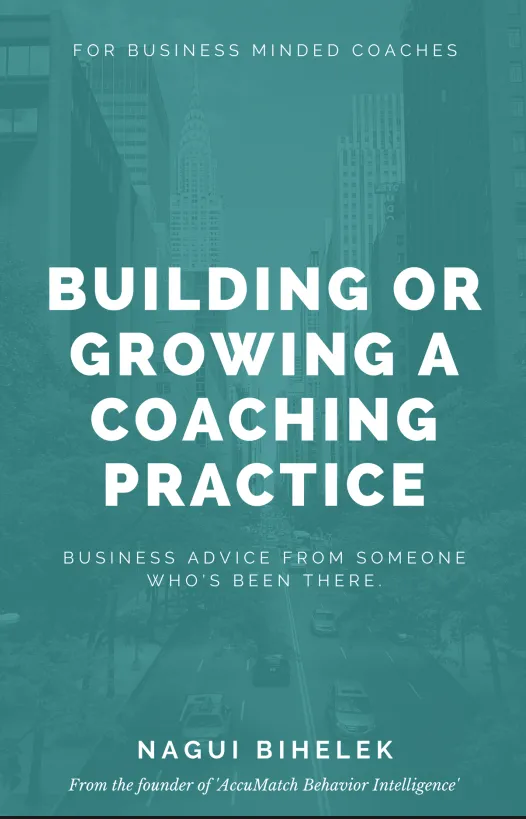
Build a Successful Coaching Practice
Business Advice from Someone Who's Been There
Step-by-step guidance on launching, growing, and sustaining a profitable coaching business, with real examples and BI-based philosophy.
For business-minded coaches seeking structure
Key Focus: Branding, positioning, and scaling for revenue
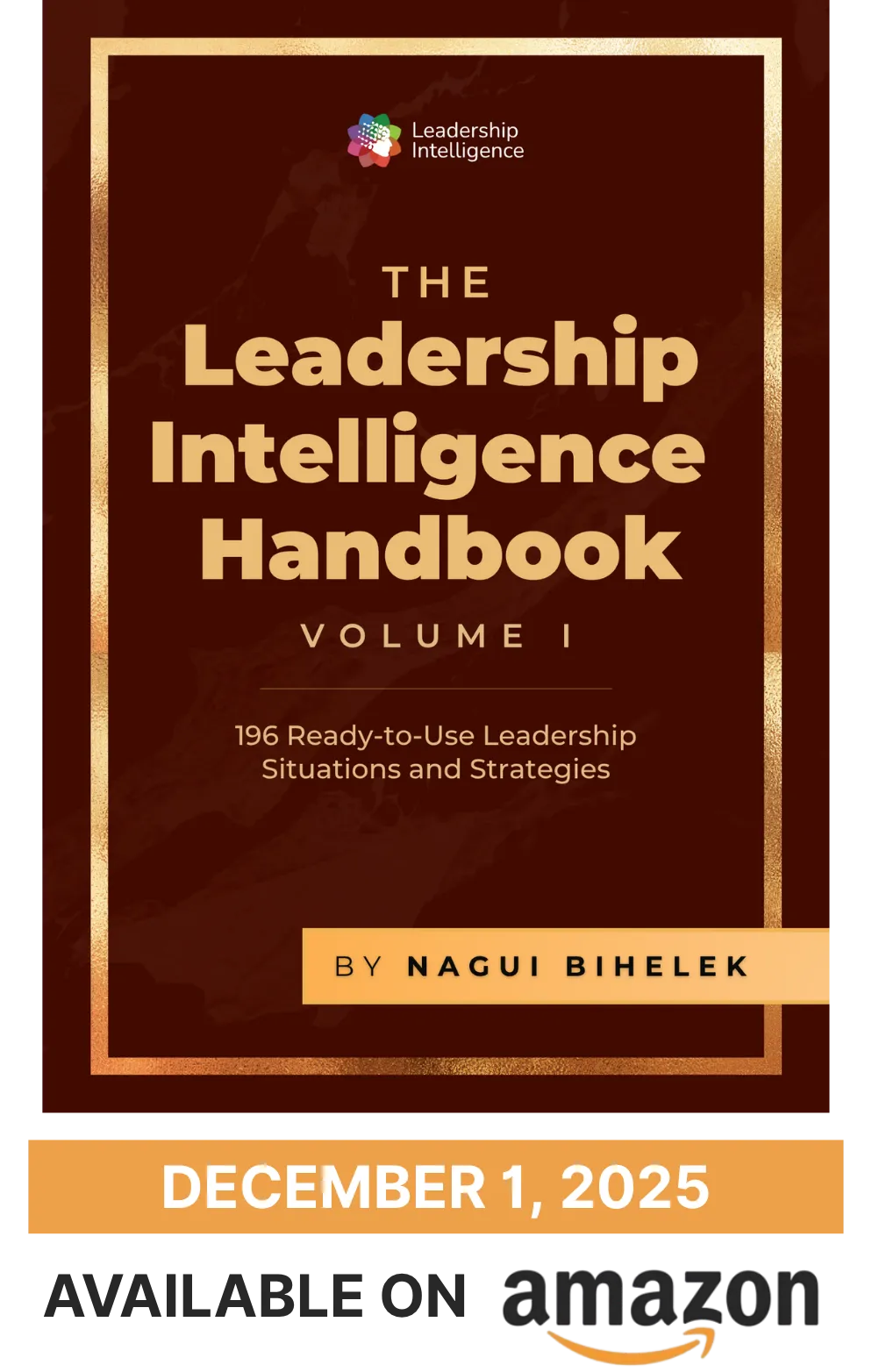
The Leadership Intelligence Handbook
196 Ready-to-Use Leadership Situations and Strategies
A practical field manual to help you coach better, lead smarter, and respond more effectively in real time. Think of it as your go-to behavioral reference guide.
Use it like a thesaurus for leadership moments
Key Focus: Master the ability to decode and shift behavior, not just analyze it.
Build a Successful Coaching Practice
Business Advice from Someone Who's Been There
Step-by-step guidance on launching, growing, and sustaining a profitable coaching business, with real examples and BI-based philosophy.
For business-minded coaches seeking structure
Key Focus: Branding, positioning, and scaling for revenue
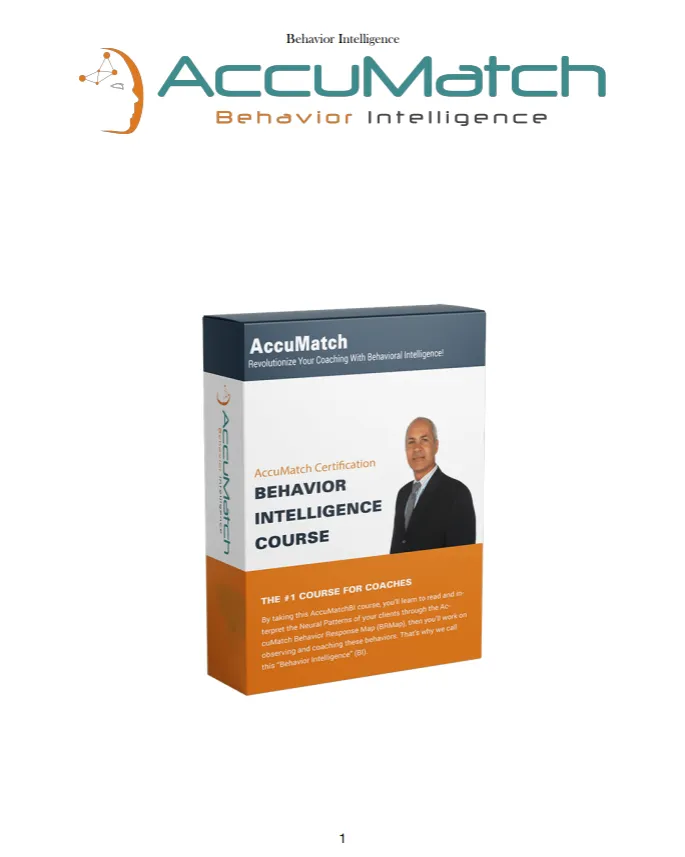
Behavior Science Essentials
Understanding the Difference Between Behavior and Personality
An insightful exploration of why behavior, not personality, is the most actionable tool for coaching. Includes self-assessment and critical contrasts.
Perfect for coaches tired of personality typing's limitations
Key Insight: Behavior is observable, trainable, and situational
Research & Validation Reports
General Evidence & Validity Report
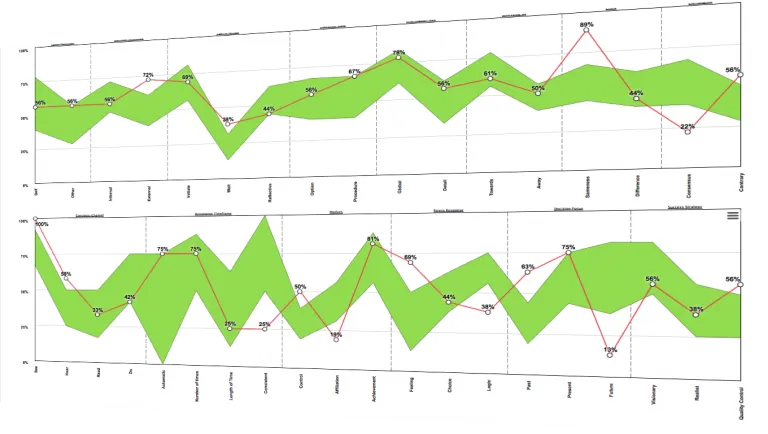
Scientific foundations of AccuMatchBI’s behavioral mapping methodology, including AI, NLP meta-programs, and measurable patterns.
For professional coaches & academics
Corporate Sector Report
Demonstrates impact of behavior intelligence in leadership, HR strategy, and organizational performance.
Ideal for executives, HR leaders, and L&D
Small & Medium Enterprises Report
Focused on how SMEs can reduce friction, boost cohesion, and drive profitability through behavior-based team dynamics.
For founders, small business teams & consultants
Ready to Launch Your Future as a Certified Leadership Intelligence Coach?
Real Coaches.
Real Success.

"I’ve been coaching for over a decade, but the BIQ certification completely changed how I work with clients. Understanding their behavior patterns—not just their feelings—gave me a new level of precision. My client retention and referrals have never been higher."
Lena Morales, Executive Coach
"BIQ helped me launch my coaching business fast—with structure, confidence, and real clients."
David Chan, Former VP
"We rolled out BIQ inside our leadership development program. The impact was immediate. Managers became more self-aware, team dynamics improved, and performance conversations finally got real. It’s not just a certification—it’s a competitive edge."
Rachel Owens, Learning & Development Director, UK
Latest From The Blog

Adaptive Leadership
Adaptive Leadership: Reading Patterns, Leading Change, and Responding in Real Time
Leadership today is not about titles, authority, or the corner office. It’s about pattern recognition—seeing what others miss, interpreting the behavioral signals beneath the surface, and adjusting course long before a crisis erupts.
The most effective leaders aren’t the ones who cling to the perfect plan. They’re the ones who read the room, watch the behaviors, understand the patterns, and adapt intelligently.
This is the heart of Adaptive Leadership through Behavior Intelligence.
In this article, I’ll walk you through the key principles I teach executives, coaches, and business owners who want to lead with clarity and agility—especially in volatile environments. These insights integrate everything from systems thinking to behavioral modeling to emotional regulation. Consider this your comprehensive guide to leading adaptively and behaviorally, without losing strategic coherence.

Why Behavior Intelligence Is the Foundation of Adaptive Leadership
Before leaders can influence others, they must understand behavior—both their own and the behavior patterns inside their teams and systems.
Behavior Intelligence gives you the tools to:
Decode what’s really happening beneath the surface
Distinguish between people problems and system problems
Predict how teams will react under pressure
Adjust workflows before performance declines
Build trust through consistent, observable action
Human beings learn through trial, error, and feedback. And organizations are no different. If you’re not watching the feedback loops—the small signals, the repeated behaviors—you will miss the early warnings that tell you where things are heading.
Leadership is less about reacting and more about recognizing patterns before they become crises.
The Leadership Trap: Reactivity Over Design
Most organizations unintentionally train leaders to become firefighters.
They wait for things to break, then rush to patch symptoms. This reactive approach leads to:
Missed deadlines
Repeated crises
Stressful work environments
Band-aid fixes that don’t address root causes
Leaders who see patterns solve problems at the source. They understand the cycle:
Trigger → Action → Reinforcement
Something triggers a behavior.
People respond out of habit or conditioning.
The reinforcement determines whether that pattern repeats.
Once you master this cycle, you can redesign behaviors, systems, and workflows deliberately—not by accident.
Pattern Recognition: The Core Skill of Adaptive Leadership
The future belongs to leaders who can see the whole pattern, not isolated behaviors.
Here’s what to watch for:
1. Ambiguity Creates Scope Creep
When expectations are vague, confusion spreads quickly. Projects become moving targets. Budgets blow out. Teams scramble.
Clarity and specificity upfront prevent headaches later.
2. Systems Shape Behavior—Not the Other Way Around
Before blaming people, check the system.
Is it reinforcing the wrong habits?
For example:
A support team is given a “solve it in 10 minutes or escalate” rule.
Result?
Nothing meaningful gets solved—and customers suffer.
That’s not a people problem.
It’s a system problem.
3. Patterns Must Be Mapped Before They Can Be Redesigned
You can’t change what you can’t see.
Track the steps—literally.
Walk through the workflow.
Observe what actually happens versus what’s “supposed” to happen.
This is the difference between fantasy leadership and reality-based leadership.

Rigidity Kills Relevance: Why Flex Points Matter
In a fast-moving world, rigidity is the enemy of relevance.
Long-term plans used to span 10 years.
Then they became 5 years.
Then 1 year.
Now even 90-day plans require planned flexibility.
If your strategy can’t pivot, you lose.
Build flex points into your processes:
Quarterly plans with monthly pivots
80/20 structures (80% systemized, 20% human adaptability)
Modular workflows that can shift quickly
Decision gates rather than fixed commitments
Leaders who adapt win.
Leaders who freeze fall behind.
Behavior as Real-Time Feedback
Annual surveys are autopsies.
By the time the data arrives, the damage has already happened.
Behavior gives you real-time diagnostics. Watch for:
Declining participation
Slower response times
Increasing mistakes
Avoidance behaviors
Emotional withdrawal
Repeating customer complaints
Rising delays or rework
Sudden changes in engagement
These behavioral signals appear long before the KPIs show red.
Great leaders react to behavior—not to lagging indicators.

Lead the Pattern, Not the Person
Blame fixes nothing.
Finger-pointing changes nothing.
Coaching individuals in isolation rarely solves systemic issues.
Adaptive leaders adjust the workflow, not the human being.
When the system changes, the behavior changes naturally.
This includes:
Creating structured check-ins
Removing bottlenecks
Improving cross-functional handoffs
Fixing unclear steps
Eliminating unnecessary escalation layers
Making expectations visible and explicit
Good systems make good people great.
Rapid Pilot Sprints: Build Resilience Through Fast Learning
The fastest way to build organizational resilience?
Micro-experiments.
Run small, controlled tests:
1-week pilots
Mini triage situations
Daily huddles during high-pressure cycles
Weekly reviews of what worked and what failed
This is how innovation happens—not through grand strategy documents, but through continuous iteration.
Resilience isn’t about being tough.
It’s about being adaptive.

The Six Pillars of Adaptive, Behaviorally Intelligent Leadership
Here’s a quick recap of the core pillars from this session:
1. See the Patterns
Watch the triggers, actions, and reinforcements.
2. Diagnose Systems Before People
Fix workflows first, not personalities.
3. Build Flex Points
Rigidity is the enemy of relevance.
4. Use Behavior as Continuous Feedback
Small signals guide strategic adjustment.
5. Lead the Pattern, Not the Person
Reshape the environment and the behaviors will follow.
6. Pilot Fast, Adapt Faster
Short sprints beat long lag times.
Adaptive leadership is the balance of process, people, technology, and behavior. The moment you integrate all four, you elevate your influence, your clarity, and your capacity to lead at scale.
Three Tools to Start Using Now
Here’s how to apply this today:
1. Pattern Mapping Workshops
Map your workflows and behavioral loops.
See what truly drives your team's outcomes.
2. Behavioral Dashboards
Track the early warning signs—not the lagging metrics.
3. Rapid Pilot Sprints
Start small. Test weekly. Adapt continuously.
These three practices alone will transform how quickly—and accurately—your team can pivot.
Adaptability Wins Every Time
The leaders who thrive aren’t the ones who know everything.
They’re the ones who notice everything.
Behavior speaks louder than surveys.
Systems create outcomes.
Patterns tell the truth.
When you learn to read them, you can lead them.
Ready to Build Your Adaptive Leadership Capacity?
If you’re ready to lead with more clarity, more agility, and more behavioral intelligence, now is the time to invest in your development.
👉 Apply now for the Leadership Intelligence Certification
👉 Join the BIQ Network community
Become the leader who doesn’t just respond to the world—
become the leader who shapes it.

Subscribe to our Newsletter!
Get the latest insights on coaching, behavior intelligence, & leadership.


Copyright 2026 • All Rights Reserved
Behavior Intelligence Organization is a Division of NLP Profiles Inc.
Terms of Use | Privacy Policy
Subscribe to our Newsletter!
Get the latest insights on coaching, behavior intelligence, & leadership.
Copyright 2025 • All Rights Reserved
Behavior Intelligence Organization is a Division of NLP Profiles Inc.
Terms of Use | Privacy Policy