






Books & Downloadable Resources
Evidence-based tools to help you coach smarter, lead more effectively, and grow with behavioral precision.
Signature Books
The Leadership Intelligence Cookbook
196 Ready-to-Use Leadership Situations and Strategies
A practical field manual to help you coach better, lead smarter, and respond more effectively in real time. Think of it as your go-to behavioral reference guide.
Use it like a thesaurus for leadership moments
Key Focus: Decode and shift behavior quickly—not just understand it
Build a Successful Coaching Practice
Business Advice from Someone Who's Been There
Step-by-step guidance on launching, growing, and sustaining a profitable coaching business, with real examples and BI-based philosophy.
For business-minded coaches seeking structure
Key Focus: Branding, positioning, and scaling for revenue
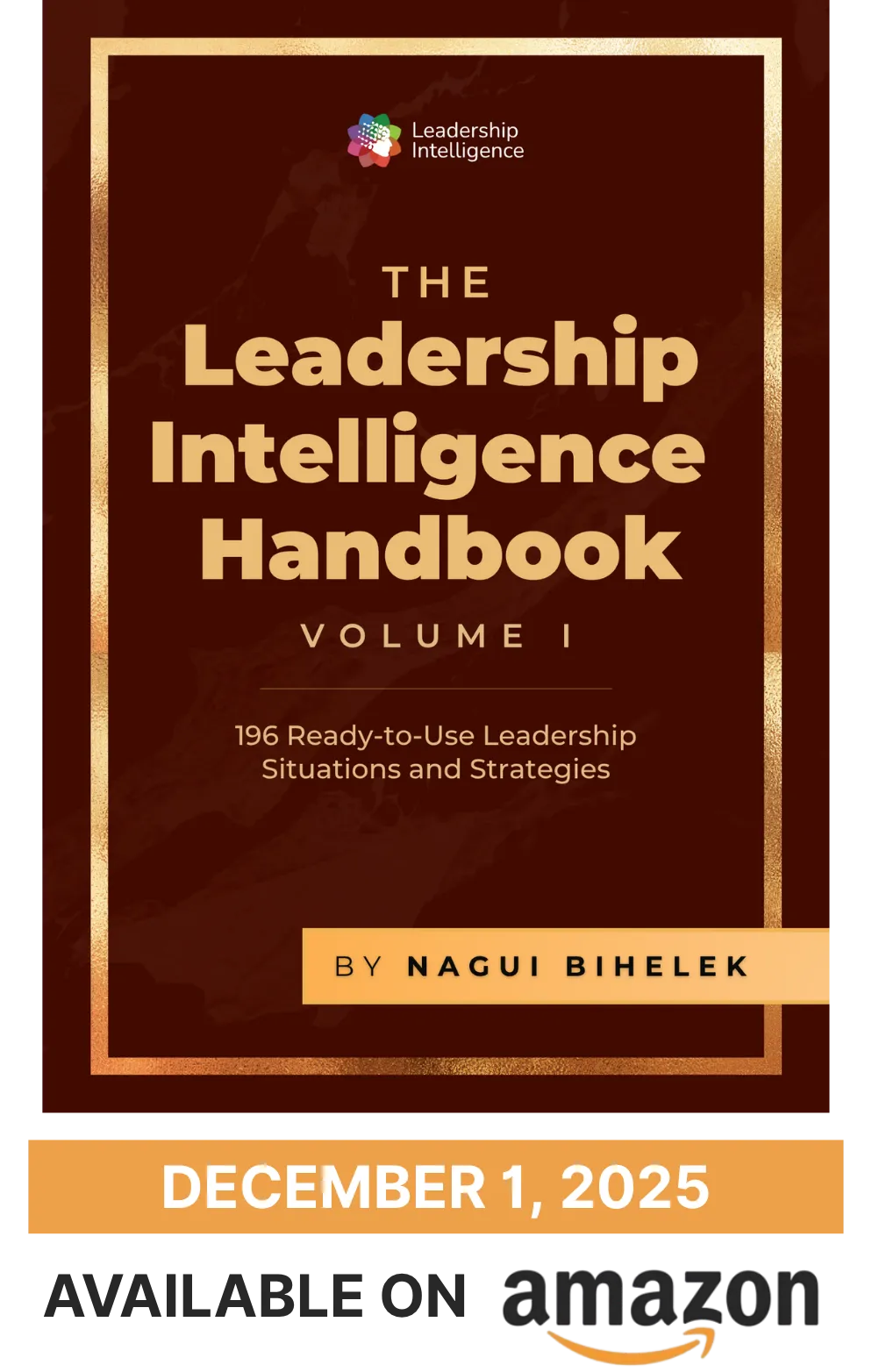
The Leadership Intelligence Handbook
196 Ready-to-Use Leadership Situations and Strategies
A practical field manual to help you coach better, lead smarter, and respond more effectively in real time. Think of it as your go-to behavioral reference guide.
Use it like a thesaurus for leadership moments
Key Focus: Master the ability to decode and shift behavior, not just analyze it.
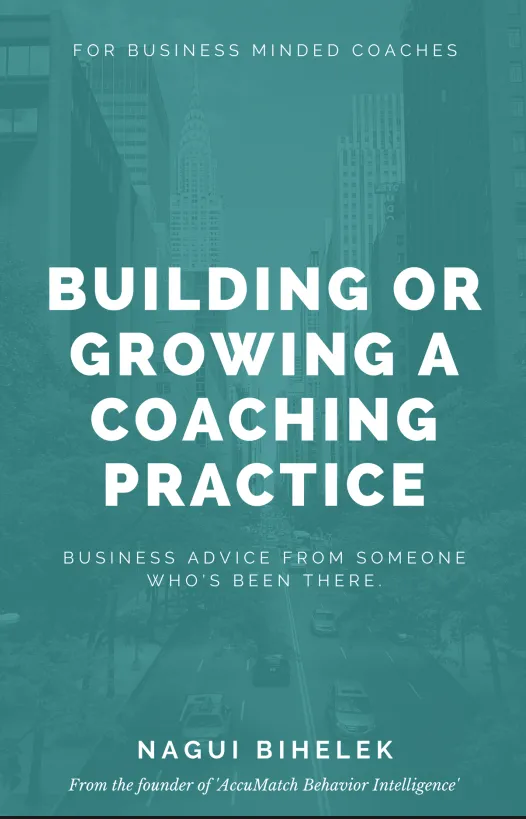
Build a Successful Coaching Practice
Business Advice from Someone Who's Been There
Step-by-step guidance on launching, growing, and sustaining a profitable coaching business, with real examples and BI-based philosophy.
For business-minded coaches seeking structure
Key Focus: Branding, positioning, and scaling for revenue
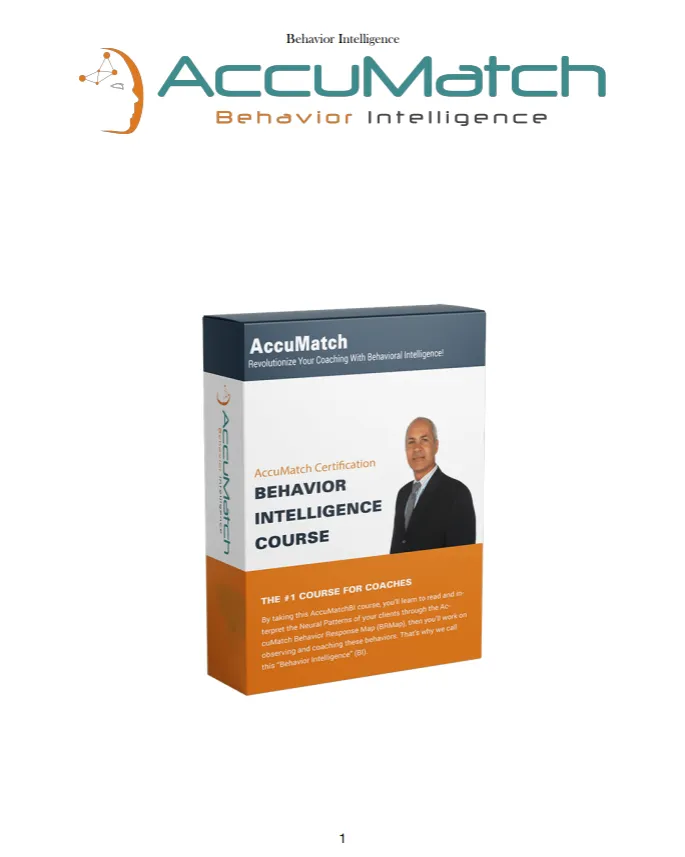
Behavior Science Essentials
Understanding the Difference Between Behavior and Personality
An insightful exploration of why behavior, not personality, is the most actionable tool for coaching. Includes self-assessment and critical contrasts.
Perfect for coaches tired of personality typing's limitations
Key Insight: Behavior is observable, trainable, and situational
Research & Validation Reports
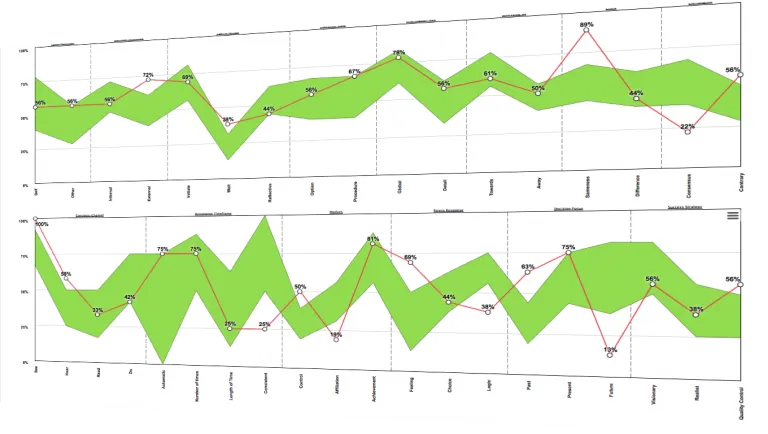
General Evidence & Validity Report
Scientific foundations of AccuMatchBI’s behavioral mapping methodology, including AI, NLP meta-programs, and measurable patterns.
For professional coaches & academics
Corporate Sector Report
Demonstrates impact of behavior intelligence in leadership, HR strategy, and organizational performance.
Ideal for executives, HR leaders, and L&D
Small & Medium Enterprises Report
Focused on how SMEs can reduce friction, boost cohesion, and drive profitability through behavior-based team dynamics.
For founders, small business teams & consultants
Ready to Launch Your Future as a Certified Leadership Intelligence Coach?
Real Coaches.
Real Success.

"I’ve been coaching for over a decade, but the BIQ certification completely changed how I work with clients. Understanding their behavior patterns—not just their feelings—gave me a new level of precision. My client retention and referrals have never been higher."
Lena Morales, Executive Coach
"BIQ helped me launch my coaching business fast—with structure, confidence, and real clients."
David Chan, Former VP
"We rolled out BIQ inside our leadership development program. The impact was immediate. Managers became more self-aware, team dynamics improved, and performance conversations finally got real. It’s not just a certification—it’s a competitive edge."
Rachel Owens, Learning & Development Director, UK
Latest From The Blog

Decision Bias in Business
Every leadership team believes their decisions are rational, data-driven, and sound.
In reality, many of those decisions are shaped long before the data is reviewed—driven by unseen biases, internal narratives, and cultural dynamics that quietly distort judgment.
I’ve seen organizations make confident, well-supported decisions that later became their most expensive mistakes. Not because they lacked intelligence—but because they lacked awareness of how bias was influencing the process.
This is where Behavior Intelligence becomes critical.
Let’s break down the most costly decision biases in business—and more importantly, how to build safeguards against them.
The Hidden Cost of “Good” Decisions
One of the most dangerous assumptions in leadership is this:
“We made the best decision with the information we had.”
Sometimes that’s true. But often, the information itself was filtered—selected, framed, or interpreted through bias.
A decision can feel right…
Be supported by data…
Have full team alignment…
…and still be wrong.
The issue isn’t intelligence. It’s perception.
1. Groupthink: When Agreement Becomes a Liability
Groupthink isn’t just about consensus—it’s about suppressed dissent.
It shows up when:
Meetings feel “too smooth”
No one challenges the dominant perspective
Silence is mistaken for agreement
People avoid speaking up to protect relationships or careers
In these environments, decisions aren’t tested—they’re validated prematurely.
What to do instead:
Assign a devil’s advocate in key decisions
Invite the quietest voice in the room to speak
Normalize disagreement as part of decision quality—not conflict
Strong teams don’t avoid tension. They use it constructively.
2. Confirmation Bias & Anchoring: Seeing What You Want to See
We all do this.
We look for:
Data that supports our belief
Evidence that confirms our direction
Feedback that reinforces our assumptions
At the same time, we:
Ignore conflicting data
Downplay risks
Justify inconsistencies
This creates a loop where your research confirms what you already believe.
What to do instead:
Actively seek disconfirming evidence
Audit your data:
Where did it come from?
What are you not highlighting?
Rotate a bias challenger in your team discussions
Awareness isn’t enough—you need structure to break the loop.
3. The Money Pit: When You Can’t Let Go
Also known as the sunk cost trap.
You’ve invested time. Money. Energy. Reputation.
So you keep going.
Not because it’s working—but because stopping feels like failure.
I’ve been there. Many leaders have.
But continuing a failing initiative is often more damaging than ending it.
What to do instead:
Define kill criteria upfront
What conditions signal “stop”?
Run a premortem
Assume failure—what caused it?
Reassess at key milestones—not just at the end
Discipline isn’t just about execution. It’s about knowing when to walk away.
4. Overconfidence: When Certainty Replaces Curiosity
Overconfidence often looks like:
Building in isolation
Skipping validation
Assuming market demand
Then you launch—and the market doesn’t respond.
Not because the idea was bad, but because it was never challenged.
What to do instead:
Test early, not perfectly
Bring in external perspectives
Build feedback loops into development
Confidence is valuable. But unchecked, it becomes blind.
5. Emotional Hijack: Decisions Under Pressure
This is where strategy turns reactive.
It happens when:
A competitor launches something new
Market pressure increases
Internal tension rises
Suddenly:
Prices are slashed
Teams scramble
Decisions are rushed
You’re no longer thinking—you’re reacting.
What to do instead:
Identify your organization’s trigger points
Create decision pause protocols
Separate urgency from importance
Emotion isn’t the problem. Unmanaged emotion is.
The Bias Audit: A Practical Framework
Awareness without structure doesn’t change behavior.
That’s why I recommend implementing a Bias Audit as part of your decision process:
Step-by-step:
Name the decision clearly
List all supporting evidence
Identify who benefits from this decision
Ask: “Would we choose this if we were starting from scratch?”
Assign someone to critique and challenge the decision
And most importantly:
Repeat this at multiple stages—not just once
Bias isn’t a one-time risk. It evolves as the project progresses.
A Simple 30-Day Implementation Plan
If you want to operationalize this, start here:
Week 1:
Conduct a bias audit on a current strategic decision
Week 2:
Introduce a rotating devil’s advocate role
Week 3:
Define kill criteria and run a premortem on active projects
Week 4:
Start a decision journal
What was decided?
Why?
What assumptions were made?
Over time, this builds a system—not just awareness.
Final Thought: The Real Risk Isn’t Bias—It’s Ignoring It
Bias is part of being human.
It’s not something you eliminate—it’s something you design around.
The organizations that win are not the ones with the smartest people.
They’re the ones with the best decision systems.
Ready to Strengthen Your Decision-Making?
If you’re serious about improving how your organization thinks, decides, and executes:
Learn how to map behavioral patterns with Behavior Intelligence
Identify blind spots in your leadership and teams
Build decision frameworks that reduce costly bias
Apply now or explore our programs to start building smarter, more resilient decision systems.

Subscribe to our Newsletter!
Get the latest insights on coaching, behavior intelligence, & leadership.


Copyright 2026 • All Rights Reserved
Behavior Intelligence Organization is a Division of NLP Profiles Inc.
Terms of Use | Privacy Policy
Subscribe to our Newsletter!
Get the latest insights on coaching, behavior intelligence, & leadership.
Copyright 2025 • All Rights Reserved
Behavior Intelligence Organization is a Division of NLP Profiles Inc.
Terms of Use | Privacy Policy