




Books & Downloadable Resources
Evidence-based tools to help you coach smarter, lead more effectively, and grow with behavioral precision.
Signature Books
The Leadership Intelligence Cookbook
196 Ready-to-Use Leadership Situations and Strategies
A practical field manual to help you coach better, lead smarter, and respond more effectively in real time. Think of it as your go-to behavioral reference guide.
Use it like a thesaurus for leadership moments
Key Focus: Decode and shift behavior quickly—not just understand it
Build a Successful Coaching Practice
Business Advice from Someone Who's Been There
Step-by-step guidance on launching, growing, and sustaining a profitable coaching business, with real examples and BI-based philosophy.
For business-minded coaches seeking structure
Key Focus: Branding, positioning, and scaling for revenue
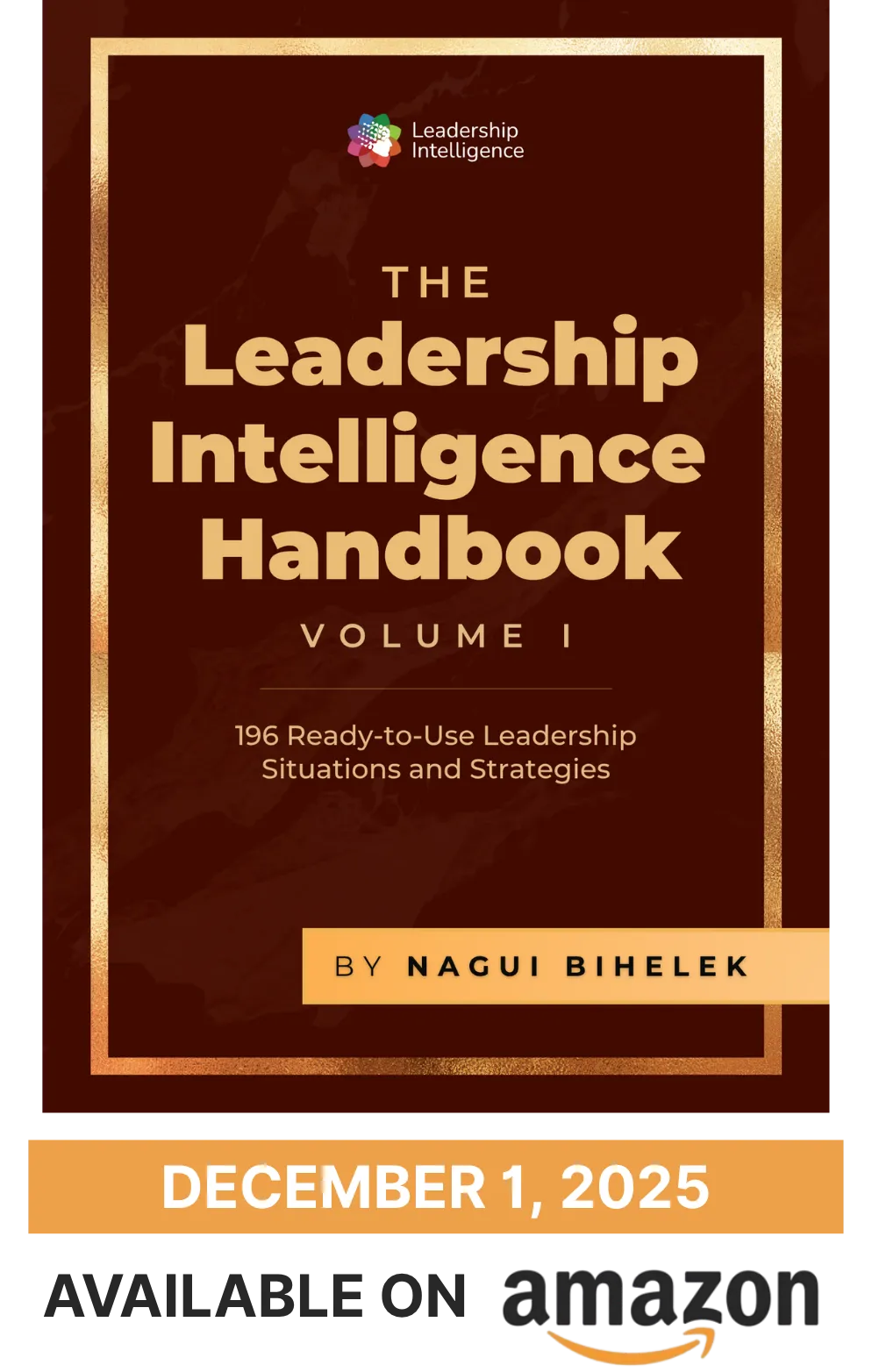
The Leadership Intelligence Handbook
196 Ready-to-Use Leadership Situations and Strategies
A practical field manual to help you coach better, lead smarter, and respond more effectively in real time. Think of it as your go-to behavioral reference guide.
Use it like a thesaurus for leadership moments
Key Focus: Master the ability to decode and shift behavior, not just analyze it.
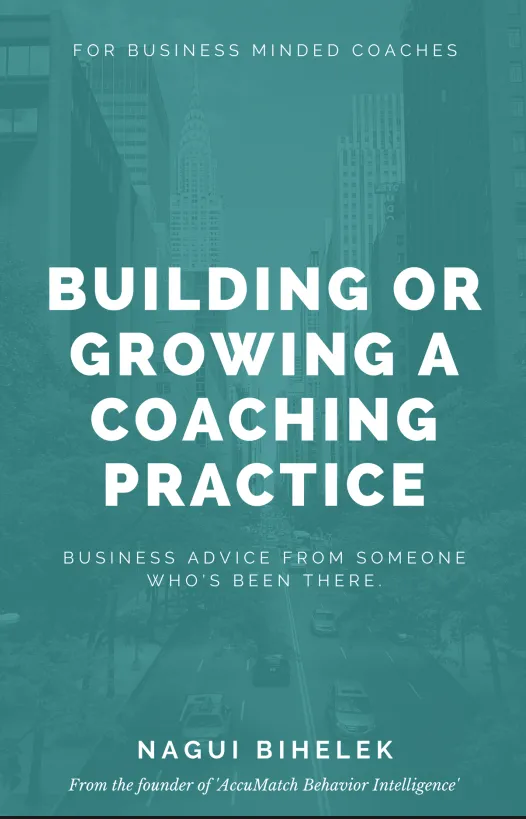
Build a Successful Coaching Practice
Business Advice from Someone Who's Been There
Step-by-step guidance on launching, growing, and sustaining a profitable coaching business, with real examples and BI-based philosophy.
For business-minded coaches seeking structure
Key Focus: Branding, positioning, and scaling for revenue
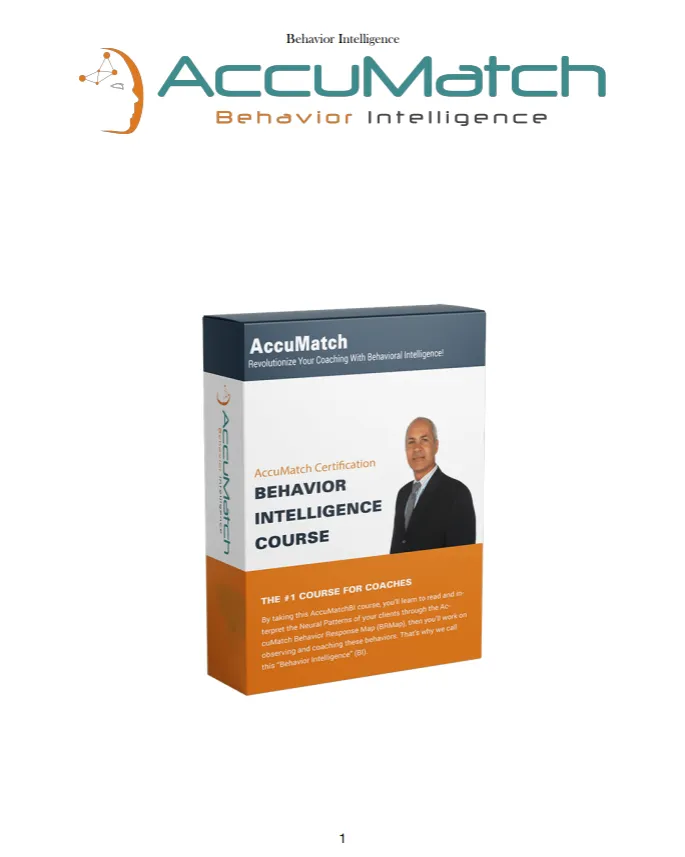
Behavior Science Essentials
Understanding the Difference Between Behavior and Personality
An insightful exploration of why behavior, not personality, is the most actionable tool for coaching. Includes self-assessment and critical contrasts.
Perfect for coaches tired of personality typing's limitations
Key Insight: Behavior is observable, trainable, and situational
Research & Validation Reports
General Evidence & Validity Report
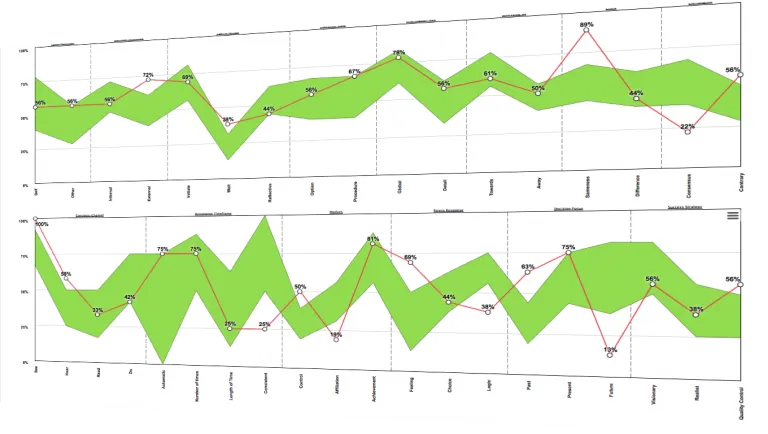
Scientific foundations of AccuMatchBI’s behavioral mapping methodology, including AI, NLP meta-programs, and measurable patterns.
For professional coaches & academics
Corporate Sector Report
Demonstrates impact of behavior intelligence in leadership, HR strategy, and organizational performance.
Ideal for executives, HR leaders, and L&D
Small & Medium Enterprises Report
Focused on how SMEs can reduce friction, boost cohesion, and drive profitability through behavior-based team dynamics.
For founders, small business teams & consultants
Ready to Launch Your Future as a Certified Leadership Intelligence Coach?
Real Coaches.
Real Success.

"I’ve been coaching for over a decade, but the BIQ certification completely changed how I work with clients. Understanding their behavior patterns—not just their feelings—gave me a new level of precision. My client retention and referrals have never been higher."
Lena Morales, Executive Coach
"BIQ helped me launch my coaching business fast—with structure, confidence, and real clients."
David Chan, Former VP
"We rolled out BIQ inside our leadership development program. The impact was immediate. Managers became more self-aware, team dynamics improved, and performance conversations finally got real. It’s not just a certification—it’s a competitive edge."
Rachel Owens, Learning & Development Director, UK
Latest From The Blog

Align Incentives with Behavior, Not Intention
Organizations don’t run on intentions. They run on behavior. And behavior follows incentives—every time.
Over decades of working with leaders, executives, and teams across industries, I’ve seen one truth repeat itself: people do what gets rewarded, not what leaders say matters. If your culture, performance, or strategy is not producing the results you expect, the answer is rarely motivation. It is almost always misaligned incentives.
Let’s unpack what truly drives behavior—and how to design incentives that actually work.

The Reality: Behavior Follows Reward, Not Intention
Leaders often communicate the right vision—collaboration, innovation, customer loyalty—but reward something else entirely. When outcomes and incentives don’t match, behavior follows the reward, not the message.
For example:
You encourage relationship-building but reward only closed sales.
You promote innovation but reward attendance and compliance.
You want teamwork but compensate individual performance only.
The system always wins. If incentives reward the wrong thing, you will consistently get the wrong behavior.
Key insight:
Attach tangible rewards to the behavior you want—not just the results you hope for.
Culture Is Observable Behavior
Culture is not values written on a wall. It is the consistent behavior people repeat every day.
If your incentives reward:
Showing up early → You get compliance.
Overtime → You get burnout.
Sales only → You get short-term wins, not long-term loyalty.
If you want collaboration, innovation, balance, or trust, your incentives must reinforce those behaviors clearly and consistently.
Ask yourself:
What behavior is truly being rewarded right now?
What behavior is unintentionally being reinforced?

Immediacy Matters More Than Size
Recognition works best when it is immediate.
Annual bonuses and delayed rewards quickly become expectations—not motivators. But timely acknowledgement has powerful behavioral impact. A simple, immediate “thank you” often outweighs a delayed financial reward.
Humans respond to reinforcement the same way across contexts:
Reward close to the behavior → behavior strengthens.
Reward delayed → impact fades.
Build rituals:
Immediate recognition
Consistent appreciation
Visible acknowledgement
Everyday respect and trust
These are the foundations of strong culture—not just compensation structures.
Penalties Also Shape Behavior—When Used Correctly
Many leaders resist consequences, yet both reward and consequence shape behavior.
The key is calibration.
Use penalties only to discourage harmful behavior, not minor mistakes.
Poorly designed penalties create fear, risk avoidance, and disengagement. Properly designed consequences:
Protect culture
Reinforce standards
Prevent destructive behavior
Promote accountability
Focus on “do no harm” behaviors—undermining trust, breaching integrity, damaging collaboration—and align consequences accordingly.
Make Incentives Visible, Fair, and Specific
Vague incentives create confusion. Invisible incentives create distrust. Unfair incentives create disengagement.
Clarity and transparency are essential.
Instead of rewarding “innovation,” define what innovation means:
Continuous learning?
Solving real business problems?
Improving systems?
Creating measurable impact?
Specificity drives behavior. Ambiguity weakens it.
Best practices:
Define observable behaviors
Make rewards visible
Ensure fairness and equity
Co-create with your team

Systems and Incentives Must Align
Behavior does not exist in isolation. Systems, measurements, and incentives are interconnected.
If your KPIs, budget allocation, and performance metrics reward one thing while leadership promotes another, behavior will always follow the system.
For example:
Rewarding funding instead of impact weakens mission-driven organizations.
Rewarding outcomes without enabling behaviors creates shortcuts.
Measuring the wrong metrics signals the wrong priorities.
Measurement tells people what truly matters.
Incentive Archaeology: Discover Your Real Culture
To change behavior, first understand what is currently driving it.
Map:
Existing rewards
Existing penalties
Observed behaviors
Actual results
Then ask:
What behavior is this system encouraging?
What behavior is it discouraging?
Where are the incentives contradicting the goals?
This is how you uncover your real culture—not the stated one.
Common Incentive Mistakes to Avoid
Rewarding outcomes but ignoring enabling behaviors
Using annual bonuses instead of timely recognition
Punishing all mistakes equally
Vague or undefined criteria
Contradictory incentives across systems
Assuming good intentions create behavior
Behavior responds to reinforcement—not hope.
A Practical 7-Day Reset
If you want immediate change, start here:
Days 1–2: Map
Identify current incentives and behaviors
Find misalignment with objectives
Day 3: Select
Choose one key behavior gap
Day 4: Design
Define the specific behavior to reinforce
Day 5: Prototype
Test with a small group
Day 6: Align
Adjust rewards and consequences
Day 7: Launch
Communicate clearly
Recognize immediately
Track behavior, not just outcomes
Small shifts in incentives produce powerful behavioral change.
Final Thought
People do not behave according to speeches, posters, or intentions.
They behave according to reinforcement.
When incentives align with behavior:
Culture strengthens
Performance improves
Trust deepens
Results become sustainable
Design incentives wisely—and behavior will follow.
Ready to Build a Behavior-Driven Organization?
If you want to learn how to systematically align behavior, incentives, and performance using Behavior Intelligence, explore our programs and tools designed for leaders, coaches, and organizations ready for real transformation.
Apply now. Learn more. Start designing for behavior.

Subscribe to our Newsletter!
Get the latest insights on coaching, behavior intelligence, & leadership.


Copyright 2026 • All Rights Reserved
Behavior Intelligence Organization is a Division of NLP Profiles Inc.
Terms of Use | Privacy Policy
Subscribe to our Newsletter!
Get the latest insights on coaching, behavior intelligence, & leadership.
Copyright 2025 • All Rights Reserved
Behavior Intelligence Organization is a Division of NLP Profiles Inc.
Terms of Use | Privacy Policy