






Become a Certified Leadership Intelligence Coach
Lead with clarity. Coach with science. Grow with purpose. Powered by Behavior Intelligence (BIQ).

Trusted by:





Leadership today demands more than emotional intelligence. It demands Behavior Intelligence.
Certified credibility
Practical behavior-driven methods
Business growth platform
Global network of professionals
How You Will Build and Grow

Get Certified
Become a Leadership Intelligence Coach

Master Behavior Intelligence
Train, Practice, Apply

Grow Your Business
Use our tools and support systems
What’s New in Behavior Intelligence
★ FEATURED
COARS – The Gateway Framework for Leadership Growth
Most leadership assessments tell you who you are. But leaders often struggle to turn insight into action.
Knowing your style rarely changes how you lead teams, make decisions, or build effective systems.
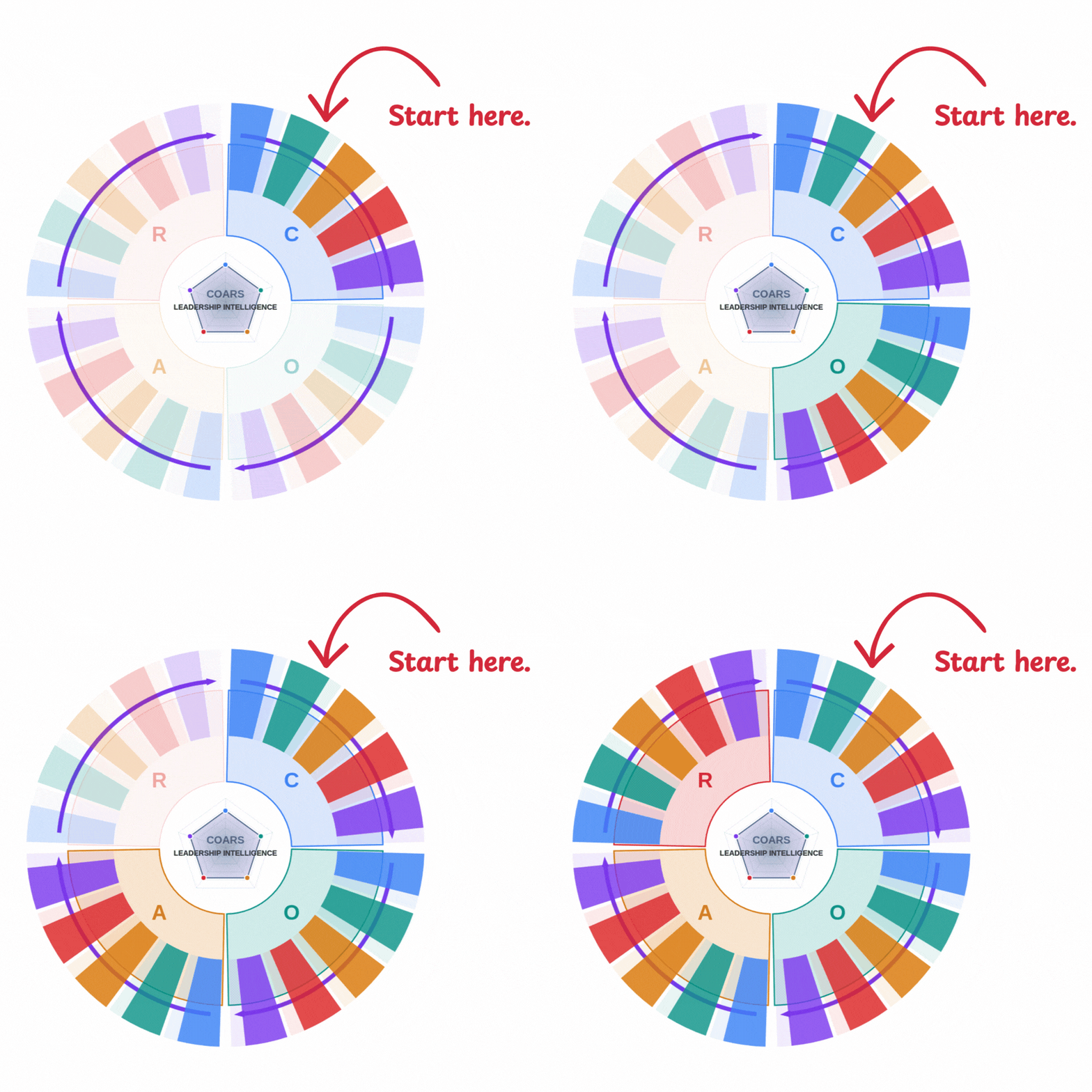
COARS is a new framework designed to bridge that gap. It guides leaders through a clear progression.
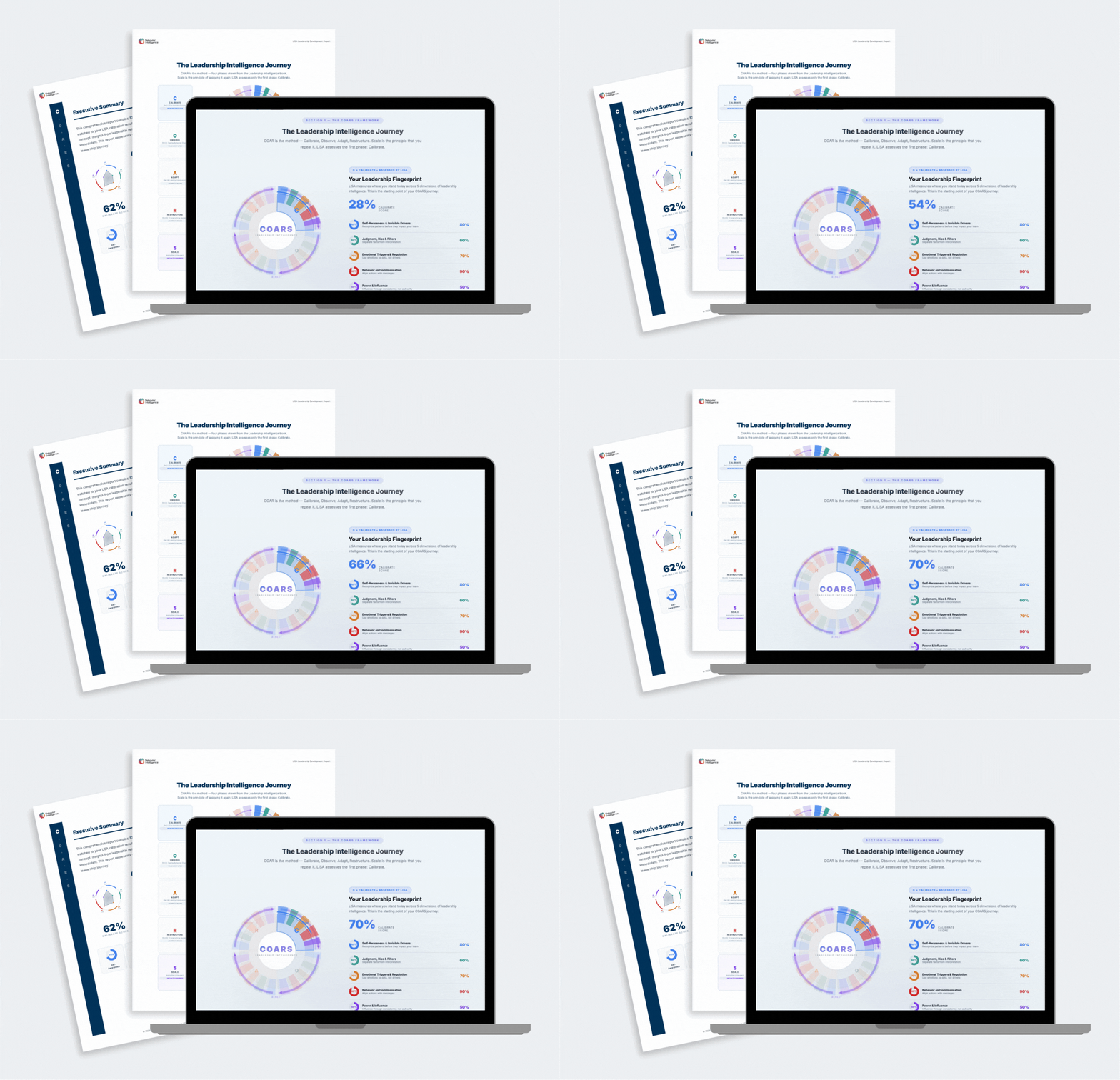
Calibrate → Observe → Adapt → Restructure → Scale
Start with Calibrate through the Leadership Intelligence Self-Assessment (LISA) to understand your current leadership baseline. From there, COARS helps you turn insight into intentional behavior change, improving both your leadership impact and team performance.
ALSO NEW
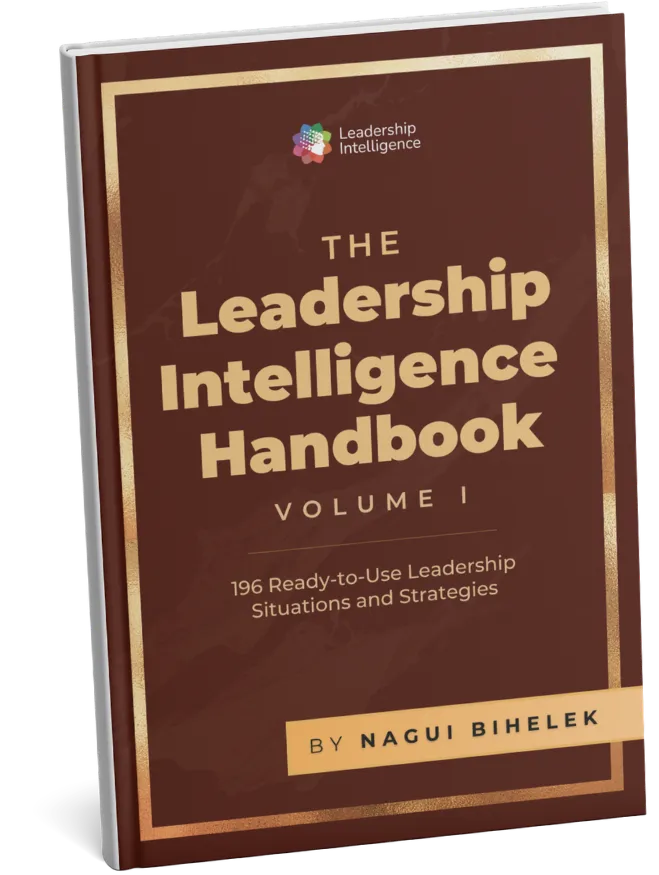
Leadership Intelligence Handbook Vol. 1
Learn how to respond in real time using 196 leadership scenarios.
Where are you starting from?
Executive transitioning to coaching?
Experienced coach seeking edge?
Organization building leaders?
Your Complete Coaching Advantage
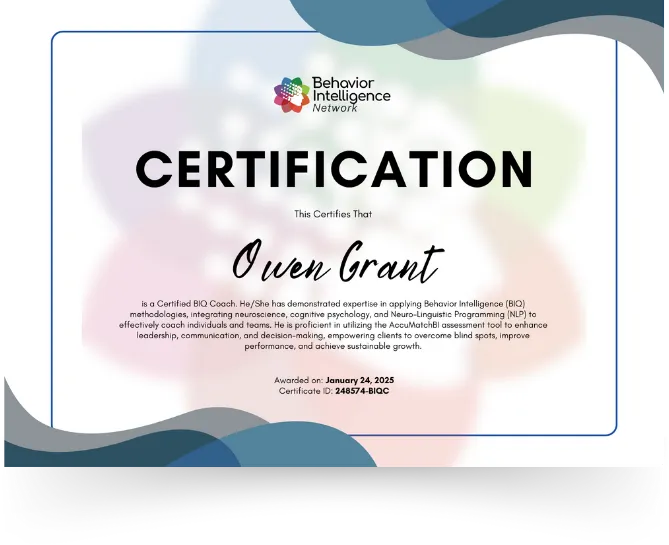
Certification
Leadership Intelligence, Behavior Intelligence, AccuMatchBI

Business Platform
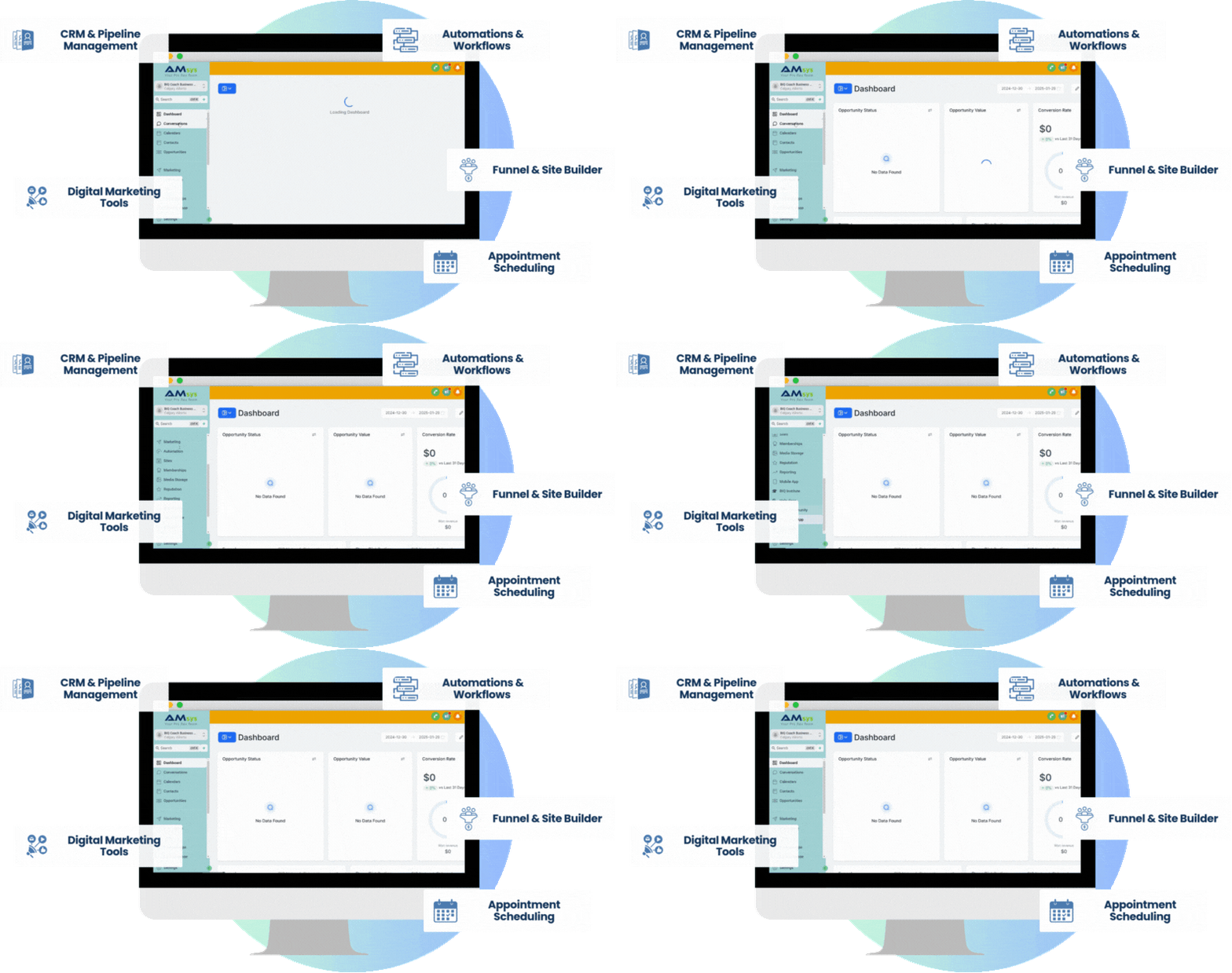
CRM, Marketing Systems, Templates
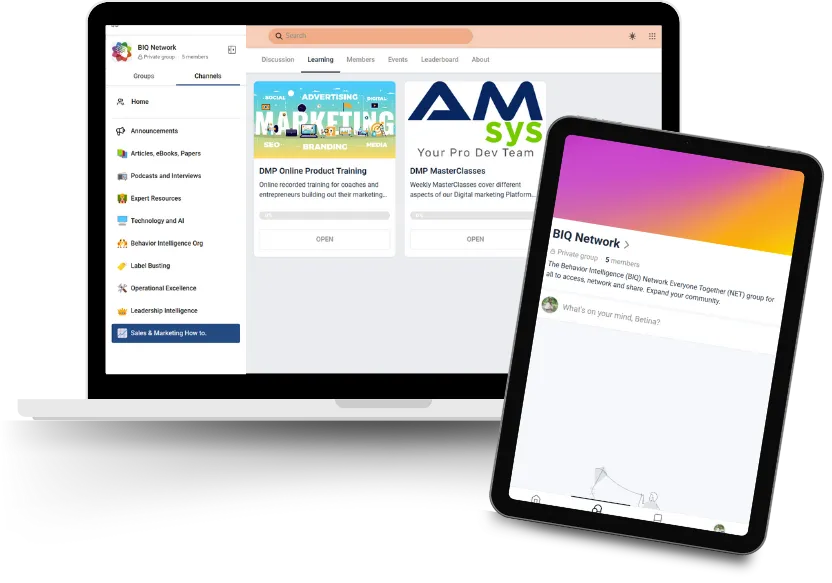
Community & Ongoing Growth
Access to BIQ Experts and Peer Network
OUR BRANDS



Ready to Lead with Intelligence?
Latest From The Blog

Business Blind Spots
Let me start with a simple idea.
Every organization tells itself a story about how it operates. Most of those stories are wrong.
The real problem is not what you don’t know. That’s just education. You can fix that. The real problem is what you think you know that isn’t true.
That’s your blind spot.

What I Mean by a Business Blind Spot
When I talk about blind spots, I’m not referring to missing information. I’m talking about false certainty.
It’s the gap between what your company says it does and what actually happens in reality. If you are not measuring that gap, it is costing you whether you see it or not.
How Blind Spots Actually Form
This doesn’t happen overnight. It builds quietly over time.
Individual habits become team norms. Team norms become departmental behavior. Departmental behavior becomes company culture. That culture then shapes your market reputation.
By the time it reaches your customers, nobody remembers how it started. It simply becomes “the way we do things.”

Behavior Is the Real Driver
Let me be very clear.
Your business is not driven by intention. It is driven by behavior.
Your customer experience, your culture, and your reputation are all behavioral. Your customers do not experience your strategy. They experience how your team behaves when they interact with them.
This is where most organizations get it wrong. They think they have a communication problem when in reality they have a behavior problem.
Gap vs Communication Gap
This distinction matters more than most leaders realize.
Ask yourself a simple question. Is this a communication issue or a behavior issue?
If the behavior does not support the message, the message becomes irrelevant. You can say all the right things internally and externally, but your results will always reflect behavior, not intention.
The Invisible Patterns Running Your Business
Most of what drives your organization is invisible because it feels normal.
You see it in how your team communicates, how decisions are made, how customers experience your business, and how your brand is perceived in the market. These patterns are consistent, repeatable, and measurable if you are willing to look at them honestly.
Why You’re Not Seeing It: Perception Filters
Even when the data exists, most organizations still miss what is happening.
The reason is simple. Filters.
We all apply them, often without realizing it.
Success filter. Past wins make you believe your current approach still works.
Identity filter. Who you think you are blocks you from seeing who you have become.
Comfort filter. Uncomfortable truths get softened or ignored.
Ego filter. Feedback is dismissed instead of explored.
So what happens is predictable. You collect feedback and then explain it away.
The data is not wrong. The lens is.
Real-World Consequences of These Filters
These filters are not harmless. They are expensive.
Organizations ignore signals that are already visible. Leaders dismiss shifts in the market. Teams filter out feedback that does not align with their internal narrative.
This is not an intelligence failure. It is a perception failure.
The data exists. The filters block it.

The Four Business Blind Spots You Must Measure
If you want to start somewhere practical, start here.
1. Brand Promise vs Reality
What you say you deliver versus what customers actually experience.
Compare your messaging with real customer feedback. Look at what customers actually say, not just the scores. If there is a gap, trust erodes quickly.
2. Culture vs Lived Experience
What leadership believes versus what employees experience daily.
Look at turnover, engagement, and what gets recognized inside the organization. Culture is what happens when leadership is not watching.
3. Market Position vs Customer Perception
Where you think you stand versus where customers place you.
Ask your customers to describe your company in three words. Then compare that to your intended positioning. If they do not match, your positioning is not landing in the market.
4. Strategy vs Execution
What you planned versus what actually gets done.
Most organizations think they have a strategy problem. They don’t. They have a behavior problem.
Every unrealized strategy points to a behavior gap. If you are revisiting the same plan every quarter, the issue is not the plan itself.
Why Calibration Comes First
In the COARS methodology, we start with calibrate for a reason.
You cannot observe what you have not acknowledged. You cannot adapt what you have not measured. You cannot restructure what you do not understand. And you cannot scale something that is not working.
Calibration is about removing your filters and looking at reality as it is.
A Practical Scorecard You Can Build This Week
Keep this simple and actionable.
Create a one-page scorecard with four quadrants: brand, culture, market, and execution.
For each quadrant, write what your organization says is true. Then write what the evidence actually shows. Measure the gap between the two.
Your lowest score represents your highest opportunity.
What You Should Do Next
Start small, but start immediately.
This week, build your four-quadrant scorecard.
Over the next month, run a brand audit, complete a culture reality check, and gather real customer perception data. This takes time, so be prepared to follow up and collect enough input to see patterns.
Over the next quarter, review the gaps, share the findings across the organization, and begin aligning behavior with reality.
This is not a one-time exercise. It becomes part of how you operate.
The Questions You Need to Ask
If you want to go deeper, ask yourself:
Where are we confusing our narrative with reality?
What are we avoiding measuring because it is uncomfortable?
What data already exists that we are not looking at honestly?
Which blind spot would our team resist the most?
That resistance is often where the most valuable insight sits.
Final Thought
I can give you tools, systems, and strategy frameworks. None of them will work if the behavior does not support them.
You do not get the results you intend. You get the results your behavior produces.
Your Next Step
Start with one blind spot. Measure it honestly. Remove the filters and look at what is actually happening.
If you want a structured way to apply this across your organization, you can go deeper:
👉 Apply for the Behavior Intelligence Certification
👉 Learn how to diagnose and eliminate blind spots using measurable frameworks

Subscribe to our Newsletter!
Get the latest insights on coaching, behavior intelligence, & leadership.


Copyright 2025 • All Rights Reserved
Behavior Intelligence Organization is a Division of NLP Profiles Inc.
Terms of Use | Privacy Policy
Subscribe to our Newsletter!
Get the latest insights on coaching, behavior intelligence, & leadership.
Copyright 2026 • All Rights Reserved
Behavior Intelligence Organization is a Division of NLP Profiles Inc.
Terms of Use | Privacy Policy